
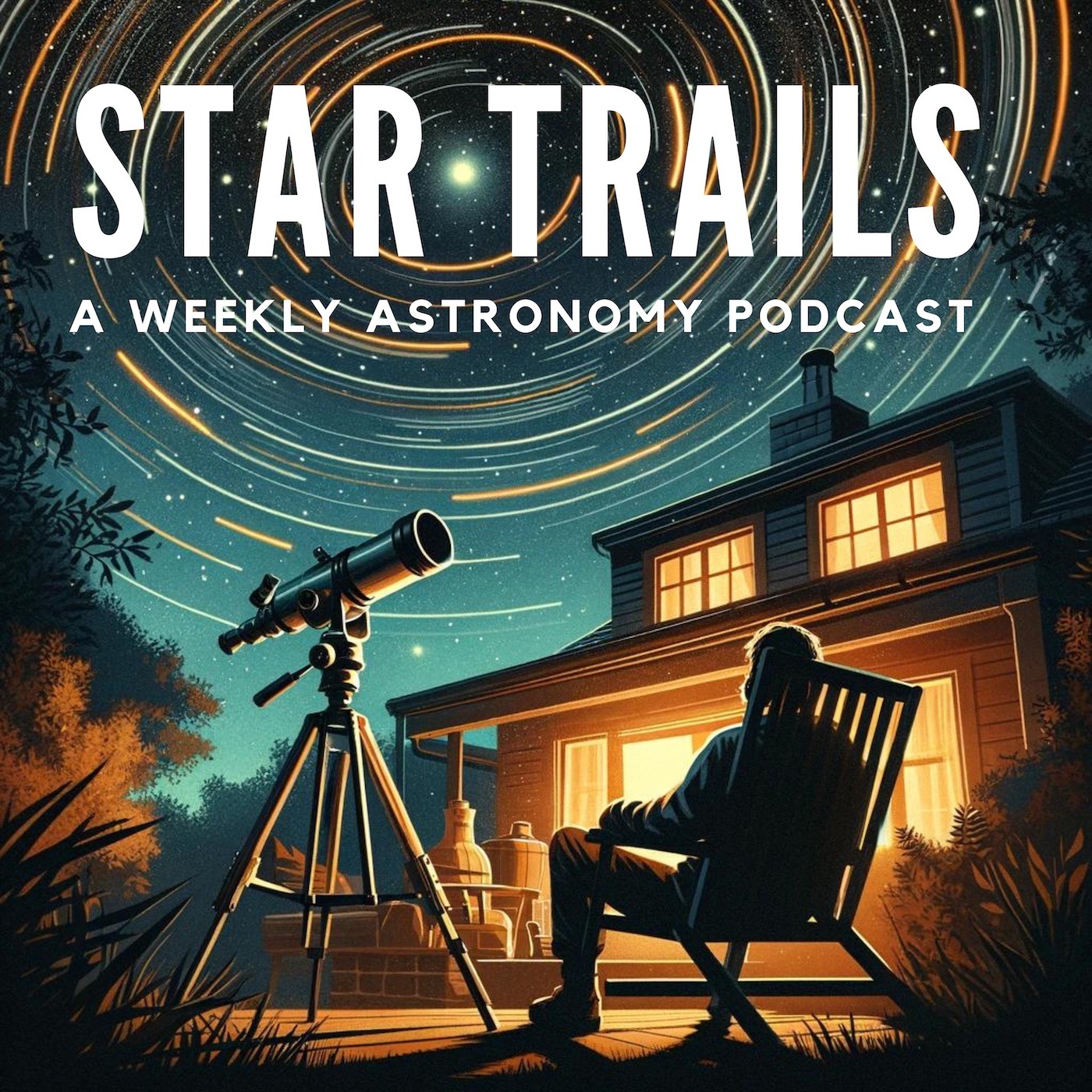
February's Frosty Cosmos: Winter Constellations Unveiled – Star Trails: A Weekly Astronomy Podcast
EP1
This episode of “Star Trails” takes listeners on an astronomical tour of the night sky for the week starting February 4, 2024.
Drew highlights key constellations visible in the North American skies, such as the radiant Orion with its notable belt and the Orion Nebula, as well as Taurus and the Pleiades star cluster. The episode also covers visible planets including Jupiter, Saturn, and Venus. Additionally, the Alpha Centaurid meteor shower is coming!
Transcript
Welcome to another episode of “Star Trails.” I’m your host, Drew, and together, we’ll embark on a celestial journey through the night sky for the week starting February 4, 2024.
Let’s kick things off with the constellations adorning our North American skies this week.
Look east after sunset, and you’ll be greeted by the radiant Orion, the Hunter. Orion is a stunning winter constellation that can’t be missed. Its three distinctive stars forming the belt, and the bright stars Rigel and Betelgeuse, are hard to ignore. Explore Orion’s sword with binoculars or a small telescope, and you might stumble upon the breathtaking Orion Nebula, a stellar nursery filled with young, hot stars.
Moving over to the western sky, we find Taurus, the Bull, with its bright, fiery eye, Aldebaran. Just to the left of Aldebaran, look for the Pleiades star cluster, often referred to as the Seven Sisters. It’s a sight to behold, especially when observed through binoculars or a small telescope. The delicate blue stars of the Pleiades make for a captivating view.
Now, let’s talk about the planets gracing our night sky this week.
Jupiter is the planet to watch in the eastern sky after sunset. With a telescope, you can marvel at its cloud bands and even spot some of its largest moons, like Ganymede and Callisto.
Saturn, the ringed jewel of the solar system, is also making its presence known in the southeast. Its dazzling rings are a sight to behold, even through a small telescope. Don’t miss the opportunity to witness this breathtaking planet.
For the early risers, Venus, the “Morning Star,” is shining brightly in the east just before sunrise. Its radiant glow is sure to awaken your sense of wonder.
Now, let’s explore some other celestial highlights for this week.
If you’re up for a challenge, try spotting the elusive Zodiacal Light in the western sky after sunset. It appears as a faint, hazy pyramid of light rising from the horizon and is caused by sunlight reflecting off interplanetary dust particles. It’s a subtle but beautiful phenomenon that’s worth seeking out.
Don’t forget to keep an eye on the Moon’s phases this week. On February 4th, we have a Waxing Crescent Moon, perfect for observing the lunar surface with binoculars or a small telescope. As the week progresses, the Moon will wax, revealing more of its dazzling features.
And last but not least, the Alpha Centaurid meteor shower peaks around February 8th. While it may not be at its zenith this week, it’s still worth scanning the southern sky for some early meteor sightings.
That concludes our celestial journey for this week. Whether you’re exploring constellations, admiring planets, or hunting for elusive cosmic phenomena, remember to find a dark spot away from city lights for the best stargazing experience.
Thank you for joining us on “Star Trails.” Until next week, keep looking up, and may the beauty of the night sky continue to inspire your cosmic adventures. Happy stargazing!
 Star Trails: A Weekly Astronomy Podcast
Leave a comment