Valentine's Stargazing: Venus, Mars, and the First Quarter Moon – Star Trails: A Weekly Astronomy Podcast
EP2
This episode of “Star Trails” takes listeners on an astronomical tour of the night sky for the week starting February 11, 2024.
Drew highlights some of the night sky’s most romantic sights, including the return of Venus and Mars. The First Quarter Moon makes an appearance on February 16, and the Andromeda Galaxy dazzles.
Transcript
Welcome back to Star Trails, fellow stargazers! I’m Drew, your guide to the celestial canvas that decorates our night sky. This week, starting February 11, 2024, promises a tapestry of celestial wonders that will captivate both the seasoned astronomer and the curious onlooker. So grab your binoculars, set up your telescopes, or just cozy up in a chair outside as we dive into the marvels awaiting us in the night sky over North America.
Our journey through the stars begins with the Moon, our closest celestial companion. This week, we’re treated to a First Quarter Moon on February 16th, where exactly half of the Moon’s face is illuminated, offering a stunning view of its craters and mountains along the terminator—the line dividing the lunar day from the lunar night.
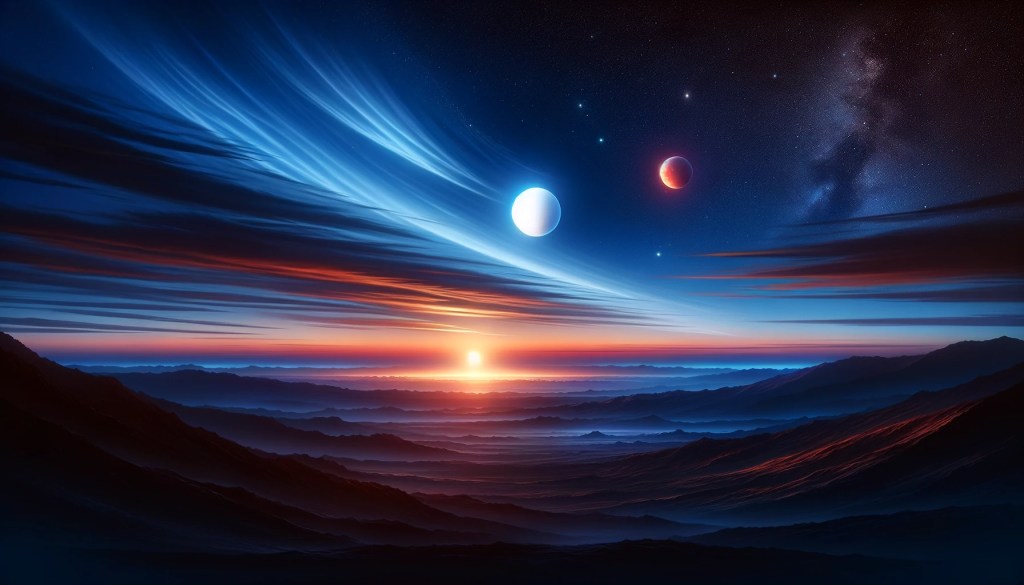
As twilight deepens, the evening sky hosts a spectacular gathering. Look to the west just after sunset to catch a glimpse of Venus, shining brilliantly as the “Evening Star.” Its unmistakable glow is a beacon in the twilight, inviting us to marvel at its beauty.
Joining Venus, Mars hangs in the western sky, offering a striking contrast with its reddish hue. The Red Planet is steadily moving toward its conjunction with Venus, creating a celestial spectacle not to be missed.
The winter sky is home to some of the most iconic constellations, and this week is no exception. Dominating the southern horizon is Orion the Hunter, easily identifiable by his belt of three aligned stars. Below the belt, the Orion Nebula — M42 — awaits, a stellar nursery where new stars are born. Visible to the naked eye and a magnificent sight through a telescope, the Orion Nebula is a highlight of the winter sky.
To the north, the majestic constellation of Ursa Major begins to make its way higher in the sky. Within it, the Big Dipper serves as a celestial guide, pointing the way to Polaris, the North Star, a steadfast beacon in the night.
For those eager to explore deeper into the cosmos, the week offers an excellent opportunity to observe the Andromeda Galaxy, M31. Visible as a faint smudge of light with the naked eye under dark skies and a splendid sight through binoculars or a telescope, Andromeda is the closest spiral galaxy to our Milky Way and provides a window into the vastness of the universe.
This week, let’s take a moment to appreciate the journey of starlight. Every photon of light that reaches our eyes from distant stars has traveled across the void of space for hundreds, thousands, or even millions of years. When we gaze up at the night sky, we are looking back in time, witnessing the universe as it was in the past. It’s a humbling reminder of the scale of the cosmos and our place within it.
And that wraps up this week’s celestial tour with Star Trails. Whether you’re observing the phases of the Moon, the dance of the planets, or the distant glow of galaxies, remember that each sight is a part of the grand story of the universe—a story that we’re all a part of. Until next time, keep looking up and let the mysteries of the cosmos inspire your nights. Clear skies and happy stargazing, everyone.
 Star Trails: A Weekly Astronomy Podcast
Leave a comment