

Marching into Spring: Jupiter Dances with the Moon; Tracing the Ecliptic – Star Trails: A Weekly Astronomy Podcast
EP6
Join us in this episode as we navigate the night sky for the week starting March 10, 2024.
Get ready for a stargazer’s feast featuring the New Moon’s dark canvas, brilliant planets, and spring’s constellation parade. Don’t miss the Jupiter-Moon conjunction on March 13. Plus, we discuss the ecliptic plane and its role in the celestial dance.
Transcript
Welcome to this week’s episode of the Star Trails podcast, I’m your host, Drew, guiding you through the celestial highlights and hidden gems of the night sky for the week starting March 10, 2024. Whether you’re a seasoned astronomer or just love to gaze up at the stars from your backyard, this episode is for you.
As we bid farewell to winter’s chill, the heavens above North America are undergoing a beautiful transformation, revealing a tapestry of stars and stories. Let’s embark on our nightly journey through these celestial landmarks.
Our week kicks off on a dark note, and I mean that in the best way possible. March 10 brings us a New Moon, providing the perfect backdrop for stargazing. With the Moon’s bright side hidden away, the stars and planets will take center stage in the night sky. As the week progresses, the Moon will wax, reaching the First Quarter phase by March 17, providing a stunning half-illuminated view by sunset. It’s an ideal time for lunar observations, where even a small telescope can reveal the rugged beauty of our closest celestial neighbor.
Now, on to this week’s constellations. The mighty Orion the Hunter, a beacon of the winter sky is now bidding us farewell in the early evening. Orion is easily spotted by its distinctive belt of three stars, a universal symbol of the night sky. Below the belt, the Orion Nebula dazzles stargazers, offering a glimpse into a stellar nursery through binoculars or a telescope.
Next, we drift towards Gemini the Twins, with Castor and Pollux shining brightly as the heads of the celestial siblings. Gemini is not just about these two luminaries; it’s a constellation rich with deep-sky treasures, like the Eskimo Nebula.
As we follow the ecliptic, Taurus the Bull charges into view. The Hyades cluster forms the bull’s face, with the red giant Aldebaran marking its eye. Not far from the Hyades, the Pleiades, or the Seven Sisters, beckon with their ethereal glow, a highlight for those with binoculars.
Our celestial tour wouldn’t be complete without a visit to the guardians of Orion, Canis Major and Canis Minor. Sirius, the brightest star in our night sky, anchors Canis Major, while Procyon in Canis Minor shines with a steadfast glow.
Rising in the east, Leo the Lion roars to life with its distinctive sickle heralding the arrival of spring. The heart of the lion, Regulus, beats brightly, inviting us to explore further, where the Leo Triplet galaxies await the gaze of those equipped with telescopes, a challenge for the adventurous observer.
High above, Ursa Major and the Big Dipper serve as our northern guide, pointing us towards Polaris, the North Star.
As the evening progresses, Virgo the Maiden rises gracefully, with Spica casting its blue-white radiance. The Virgo Cluster of galaxies, hidden within her confines, offers a celestial puzzle for telescope users, a reminder of the vastness of our universe.
Lastly, nestled between the more luminous constellations of Gemini and Leo, Cancer the Crab quietly makes its presence known. The Beehive Cluster, or M44, lies at its heart, a swarm of stars that reveals the intricate beauty of our galaxy.
Also, don’t miss the Zodiacal Light, visible in the western sky after sunset for the first half of March. This faint, triangular glow is sunlight reflecting off cosmic dust in the solar system plane, best seen from dark locations.
For our planet watchers, Venus continues to dazzle as the brilliant morning star, visible low in the southeast sky around 6:30 A.M. early in the week.
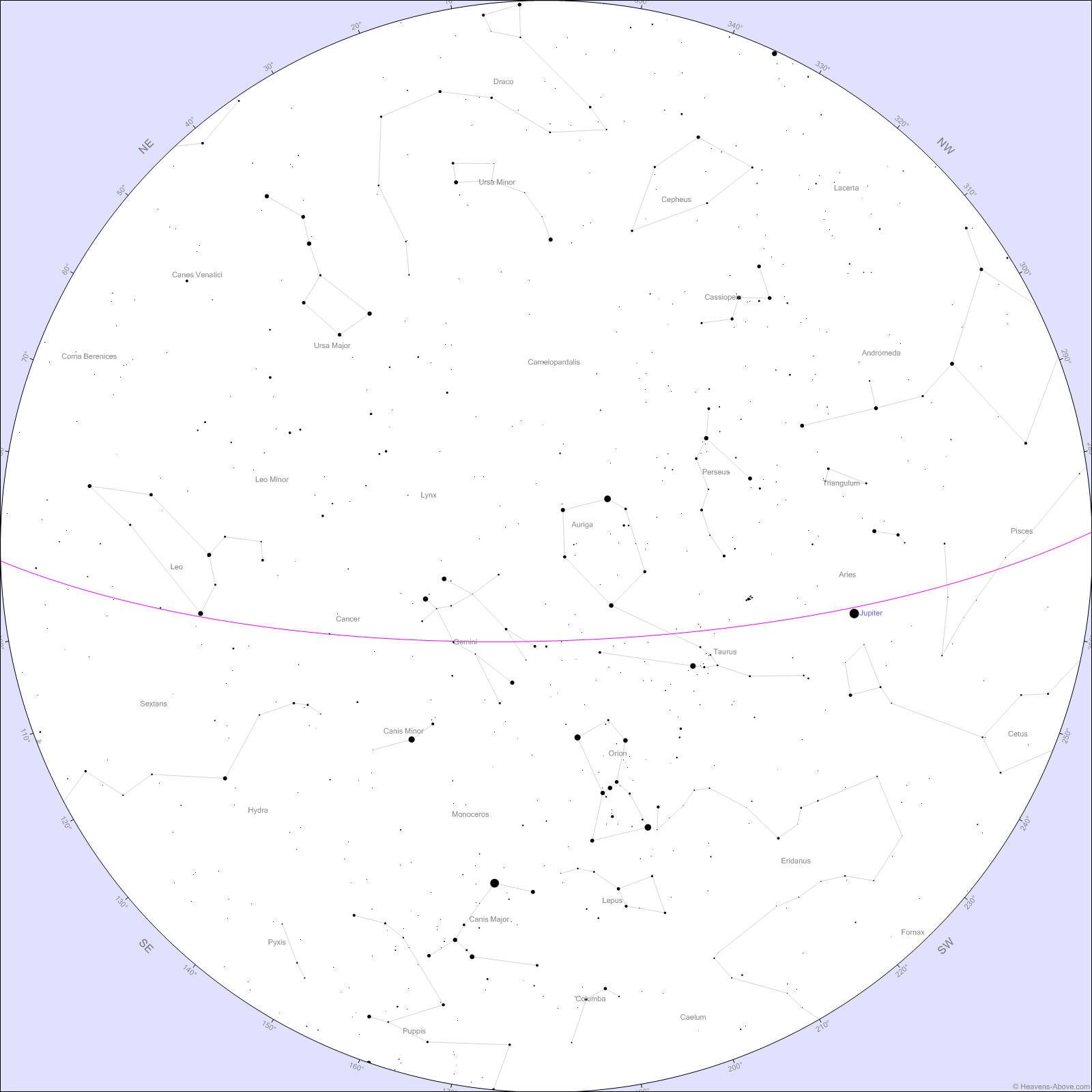
On March 13, look up to see the Moon cozying up to Jupiter. This celestial duo will be mingling in the constellation Aries, just a stone’s throw away from each other, or so it’ll seem from our earthly perspective. Jupiter, the gas giant, shines bright, making this conjunction a sight you won’t want to miss. And the best part? You can enjoy this show with the naked eye or, for a closer look, a pair of binoculars.
Let’s not forget about Mercury. Starting March 13 and stretching all the way to the 27th, Mercury makes a grand appearance low in the twilight sky. This little rock, the first planet from the Sun, will be showing off its brilliance with an apparent magnitude of -1.2. It’s a rare opportunity to catch Mercury in action, as it reaches its greatest elongation east on March 24. But for our week, just knowing it’s there and beginning its dance across the twilight is enough to add a little excitement to our stargazing.
Amidst our exploration of these planets, let’s pause to delve into a fascinating concept that ties these celestial wanderers together. Earlier in this episode, I mentioned the ecliptic plane. This invisible line is not just a cornerstone of astronomy; it’s the grand stage upon which the planets perform their cosmic ballet.
The ecliptic plane is essentially the plane of Earth’s orbit around the Sun. Imagine a flat, disk-shaped space extending out from the Sun, marking the path Earth takes as it travels through space. This plane is of special interest because it’s the highway of our solar system. Most planets, including those visible this week, orbit the Sun within this plane, making their paths across our sky relatively predictable.
For astronomers, the ecliptic plane is a guide. By understanding its path across the sky, we can predict where to find the planets at any given time of the year. When we say Jupiter, Mars, and Saturn are visible in the eastern sky before dawn, it’s because they are near their alignment with the ecliptic plane, as viewed from Earth.
Moreover, the ecliptic plane is a key player in celestial events such as eclipses. Solar and lunar eclipses occur when the Moon’s orbit intersects the ecliptic plane at just the right time to align with the Earth and Sun. This alignment is a delicate dance of shadows and light, only possible because of the geometry of the ecliptic.
Modern technology offers a convenient way to locate the ecliptic. Star charts and astronomy apps, such as Sky Safari, can show the ecliptic plane relative to the stars and constellations visible from your location. Many apps provide real-time overlays that identify the ecliptic plane, making it easier to visualize its path across the sky.
As this week’s journey through the stars concludes, we’re reminded of the unending beauty and mystery that the night sky holds. Every night offers a unique spectacle in the night sky, a reminder of the ever-changing yet timeless nature of the cosmos. Whether you’re observing with high-tech gear or just your eyes, the beauty of the universe is accessible to all who take the time to look up.
And that wraps up this week’s episode of Star Trails. Remember, the universe is always overhead, waiting to be discovered. Until next time, clear skies and happy stargazing!
 Star Trails: A Weekly Astronomy Podcast
Leave a comment