A New Moon in April Offers Dark Skies; Plus, All About Eclipses – Star Trails: A Weekly Astronomy Podcast
EP9
Join us this week as we embark on a celestial journey starting March 31.
Host Drew guides you through a week of astronomical wonders, from the waning crescent to the waxing crescent moon, setting the stage for prime stargazing opportunities. The Moon has a close encounter with Mars and Saturn, and the breathtaking spectacle of the upcoming total solar eclipse is only a week away.
Plus, don’t miss our Astronomy 101 segment, where we unravel the phenomena of solar and lunar eclipses.
Transcript
Welcome to Star Trails, the podcast where we navigate the celestial sphere and guide you through the wonders of the night sky. I’m your host, Drew, and this week, starting March 31, we’re embarking on a stellar journey across the cosmos. So, grab your telescopes, binoculars, or just your curiosity, as we explore the astronomical sights and events visible in the Northern Hemisphere.
This week’s lunar journey begins with the waning crescent phase on March 31, offering early risers a glimpse of the Moon’s delicate sliver before dawn. As we transition into April, the Moon reaches its new moon phase, a period when it aligns between the Earth and Sun, rendering it invisible against the night sky. This absence of moonlight creates ideal conditions for stargazing, unveiling the stars’ brilliance with greater clarity. Later in the week, the Moon embarks on its waxing crescent phase, gradually revealing a growing slice of illumination and signaling the beginning of a new lunar cycle.
Planet watchers will want to stay up late On the night of April 5th. Just before midnight, the Moon will cozy up to Mars and Saturn, offering a splendid view in the constellation Aries for Mars, and Aquarius for Saturn.
As we cast our gaze across the night sky, several constellations take center stage in April’s night sky. Ursa Major, with its famous Big Dipper asterism, and Leo, and Leo Minor, shine brightly in the northern celestial hemisphere.
April skies are also a gateway to distant galaxies, nebulae, and star clusters. The Cigar Galaxy, M82, and Bode’s Galaxy, M81, in Ursa Major offer a peek into distant celestial neighborhoods. For nebula enthusiasts, the Orion Nebula, M42, and the Helix Nebula in Aquarius, present stellar nurseries and the remnants of dead stars. Star clusters like the Pleiades, M45, and the Beehive Cluster, M44, showcase the beauty of stars born together.
For those with a keen eye or a telescope, deep sky treasures abound. The Horsehead Nebula, a dark nebula set against the bright backdrop of IC 434 in Orion, and the Ring Nebula, M57, in Lyra, offer a look at the fate of Sun-like stars.
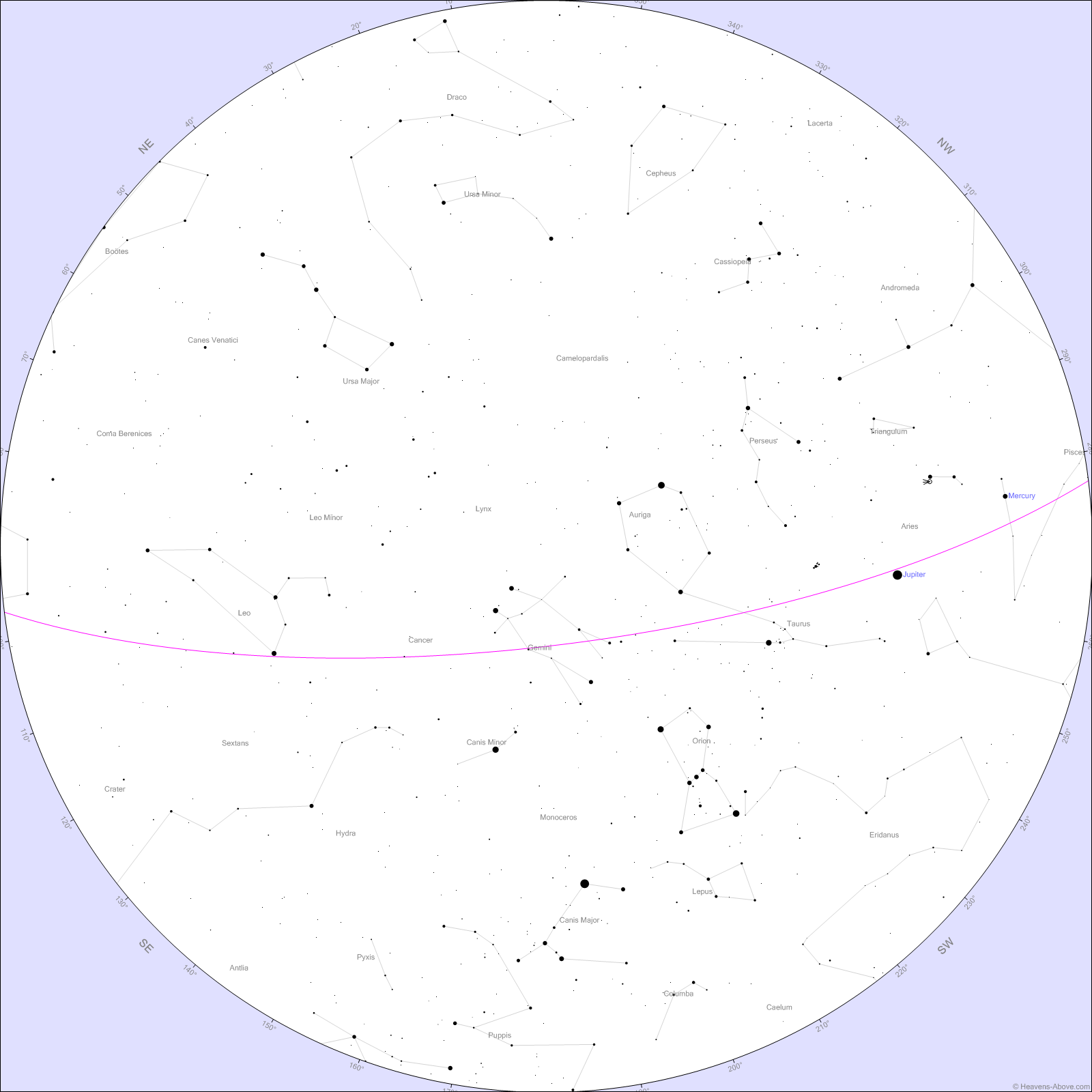
As always, to make the most of your stargazing experience, seek out dark skies away from city lights. take advantage of this week’s new Moon if you can. And remember, you can download a star map of this week’s sky from our website. We’ll include a direct link in this episode’s show notes.
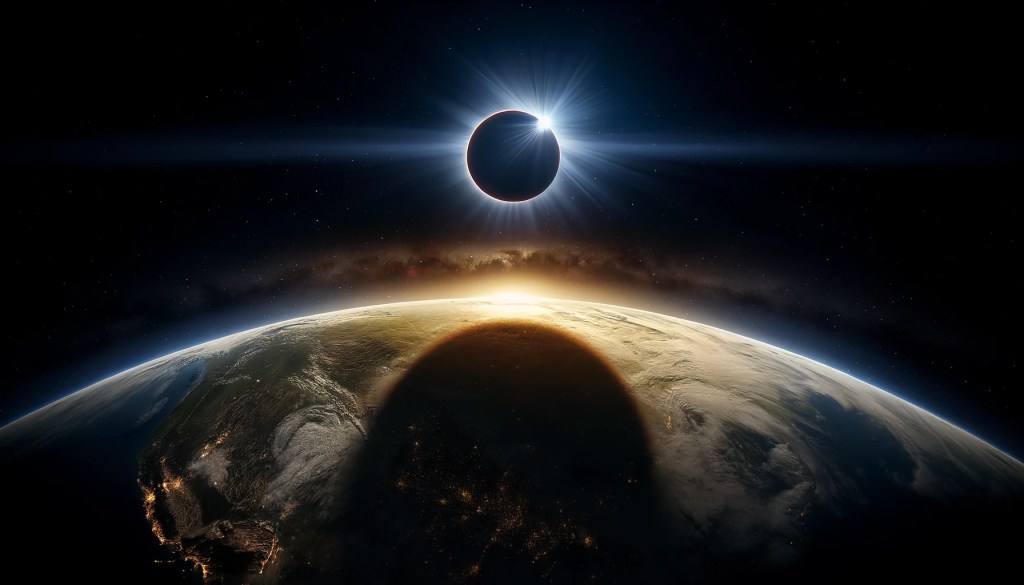
And while not within our week, it’s worth noting the Total Solar Eclipse on April 8th. Visible from Mexico, the US, and Canada, this eclipse promises to be a spectacular event for those on its path.
So before we wrap up today’s episode, let’s dive into an “Astronomy 101” segment on eclipses!
An eclipse occurs when one celestial body moves into the shadow of another. There are two main types of eclipses that we can observe from Earth: solar and lunar.
Solar Eclipses happen when the Moon passes between the Earth and the Sun, casting a shadow on Earth. If you’re in the path of the Moon’s shadow, you’ll see the Sun gradually covered by the Moon. Solar eclipses can be total, partial, or annular, depending on the alignment and distances between the Earth, Moon, and Sun.
During a total solar eclipse, the day turns into night for a brief period. Observing the Sun’s corona, its outer atmosphere, becomes possible -— a sight that’s not to be missed. Always use proper solar viewing glasses to watch any phase of a solar eclipse directly. An annular eclipse is a type of solar eclipse that occurs when the Moon passes between the Earth and the Sun but does not completely cover the Sun as observed from Earth. This happens because the Moon is at a point in its orbit where it is too far from Earth to entirely obscure the Sun. The sky does not become dark during an annular eclipse. Instead, the bright ring of the Sun’s outer edges remains visible, creating a “ring of fire” effect in the sky. It’s a breathtaking sight, but it’s essential to use solar viewing glasses or other safe viewing methods when watching an annular eclipse.
Lunar Eclipses occur when the Earth is positioned between the Sun and the Moon, causing the Earth to cast a shadow over the Moon. Lunar eclipses can be total, partial, or penumbral, with the appearance of the eclipse depending on how the Moon passes through the Earth’s shadow.
A total lunar eclipse transforms the Moon’s appearance, often turning it a reddish color, commonly referred to as a “blood moon.” Lunar eclipses are safe to view with the naked eye. A penumbral lunar eclipse occurs when the Moon passes through the diffuse edge of the Earth’s shadow. This type of eclipse is more subtle and less spectacular than a total or partial lunar eclipse. Because of its subtle nature, a penumbral lunar eclipse doesn’t provide the dramatic visual changes seen in other types of eclipses, and many people might not even realize an eclipse is happening unless they are specifically looking for it.
The April 8 solar eclipse is particularly exciting because it’s a rare opportunity for those in North America to witness the Moon completely covering the Sun, revealing the stunning solar corona. Cities along the path of totality will experience daytime darkness for a few magical minutes. If you’re outside the path, you’ll still see a partial eclipse, which is also a wonderful sight.
Eclipses are not only beautiful celestial events but also provide valuable opportunities for scientific study, offering insights into the dynamics of our Sun and Moon. Whether you’re an avid stargazer or a casual observer, witnessing an eclipse is an awe-inspiring experience that connects us more deeply with the cosmos.
That’s a wrap for this episode. Keep an eye on the sky, and make sure to mark your calendars for the April 8 solar eclipse. Until next time, this is Drew from Star Trails, wishing you clear skies and thrilling celestial sightings!
 Star Trails: A Weekly Astronomy Podcast
Leave a comment