The Wonders of Early April, the Eclipse, and the Life Cycle of Stars – Star Trails: A Weekly Astronomy Podcast
EP10
Join us this week as we embark on a celestial journey starting April 7. This week is filled with astronomical phenomena, including a total solar eclipse, planetary conjunctions, and the New Moon ensures dark skies for observations.
Plus, we take a look at the life cycle of stars, and a significant moment in space exploration.
Transcript
Welcome, star gazers and night sky enthusiasts, to another episode of Star Trails. I’m your host, Drew, and this week, we’re embarking on a nocturnal adventure to uncover the celestial highlights for the week beginning April 7th. From a spectacular total solar eclipse to the dance of planets and stars, there’s plenty to explore. In this episode we’ll also take a look at the lifecycle of stars, and reflect on a landmark moment in the history of space exploration. So, let’s dive right in!
First up, mark your calendars for April 8th, as North America will witness a breathtaking total solar eclipse. The Moon will pass directly between the Earth and the Sun, casting its shadow and bringing daylight to a brief but awe-inspiring darkness. Remember, safety first — ensure you use proper eclipse glasses to witness this celestial spectacle. And in case you missed it, we covered the mechanics of eclipses in our previous episode. Be sure to check it out to learn more.
On the same day of the eclipse, the New Moon will bring darkness to our night skies, setting the stage for conditions perfect for stargazing. Without the Moon’s glow, it’s an ideal time to spot fainter stars and deep sky objects.
Throughout the week, the dance of planets offers a delightful show. On the night of April 5th, a thin crescent Moon flirts with Mars and Saturn in a series of close approaches and conjunctions, culminating in a lunar occultation of Saturn for those lucky enough to be in the right viewing location. It’s a fantastic opportunity to see the ringed planet disappear behind the Moon, only to re-emerge on the other side.
And speaking of planets, in the pre-dawn hours of April 10th, Saturn and Mars will be in conjunction, appearing close together in the eastern sky. It’s a rare chance to see the red planet and the ringed giant sharing the same celestial canvas.
Looking deeper into the cosmos, the week also features well-placed deep sky objects. The Whirlpool Galaxy, M51, a face-on spiral galaxy with its companion, is perfectly positioned for observation. Its swirling arms, aglow with star formation, are a sight to behold through a telescope. You can find it near the upper end of the Big Dipper’s handle.
And let’s not forget, April is also the month of the Lyrid meteor shower, peaking later in the month. While the peak is just beyond our current week’s scope, early-bird watchers might still catch a few early Lyrids streaking across the pre-dawn sky.
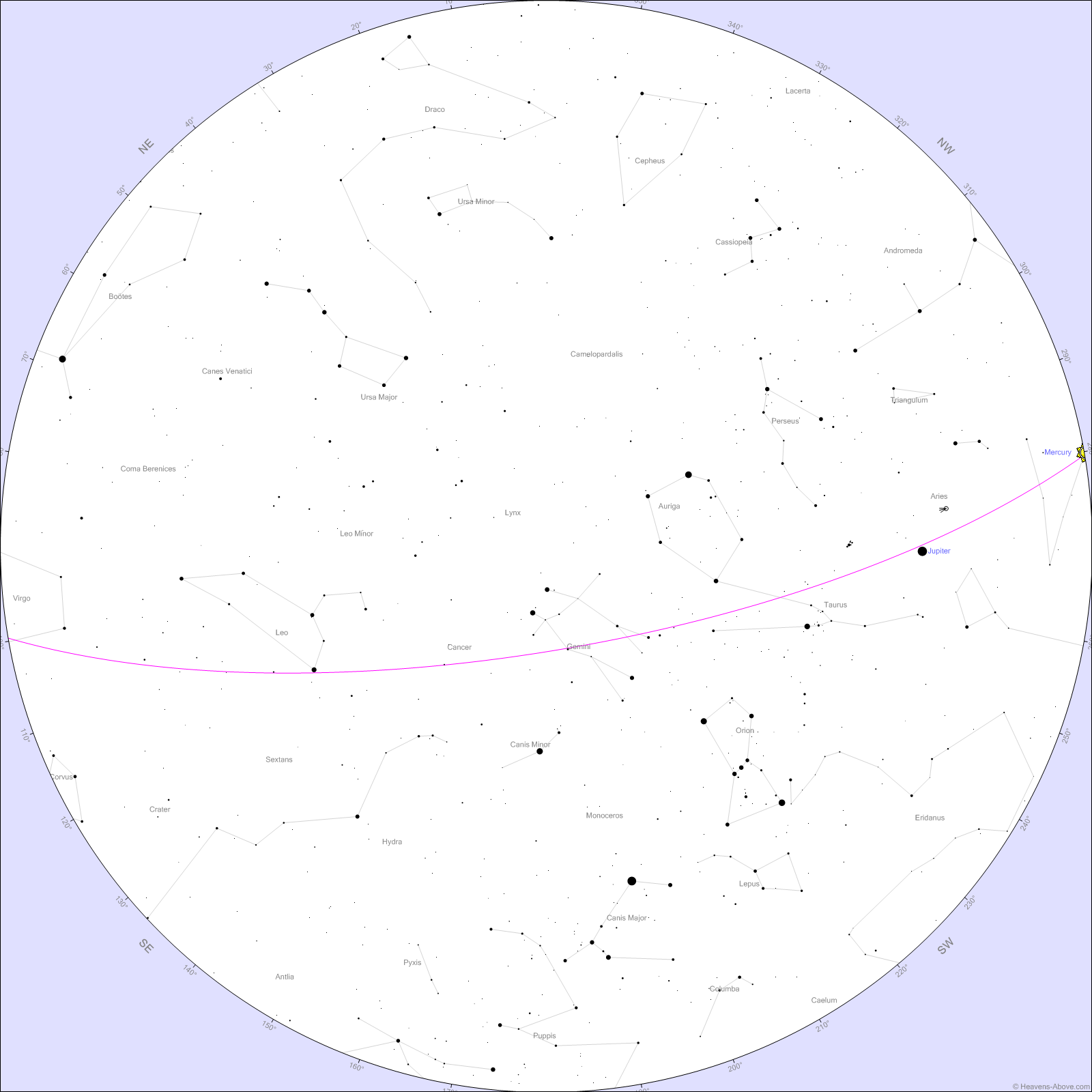
Have you seen Comet 12P/Pons-Brooks yet? This Haley-type periodic comet comes around once every 71 years. I went out hunting for this so-called “Devil Comet” last week, and I managed to catch it at dusk in the western sky, adjacent to the brightest star in Aries, the fiery-hued orange giant, Hamal. Owing to atmospheric haze and light pollution at my viewing location, I could just barely make out the bright nucleus of the comet as a dim smudge in 11 by 70 binoculars.
The comet will disappear into the Sun’s glow after mid-month, so catch it while you can!
In this episode’s Astronomy 101 segment, we’re embarking on a journey to understand the life cycle of stars, from their dramatic birth to their final curtain call.
Our story begins in the most unassuming places in the galaxy: the nebulae. These vast, beautiful clouds of gas and dust are the cradles of star birth. Hidden within them are the secrets to how a star comes into being. It’s in these cosmic nurseries where gravity plays the role of a matchmaker, pulling together gas and dust to form a new star. This process can take millions of years, but it’s the first step in the life of a star.
Once enough material clumps together, the core of this new star gets so hot and dense that nuclear fusion ignites. This is the process that powers the sun and all other stars, fusing hydrogen atoms into helium, and releasing an incredible amount of energy. This energy is what lights up the star and what makes life on Earth possible. The star has now entered what we call the “Main Sequence” phase of its life, a period of stability and light.
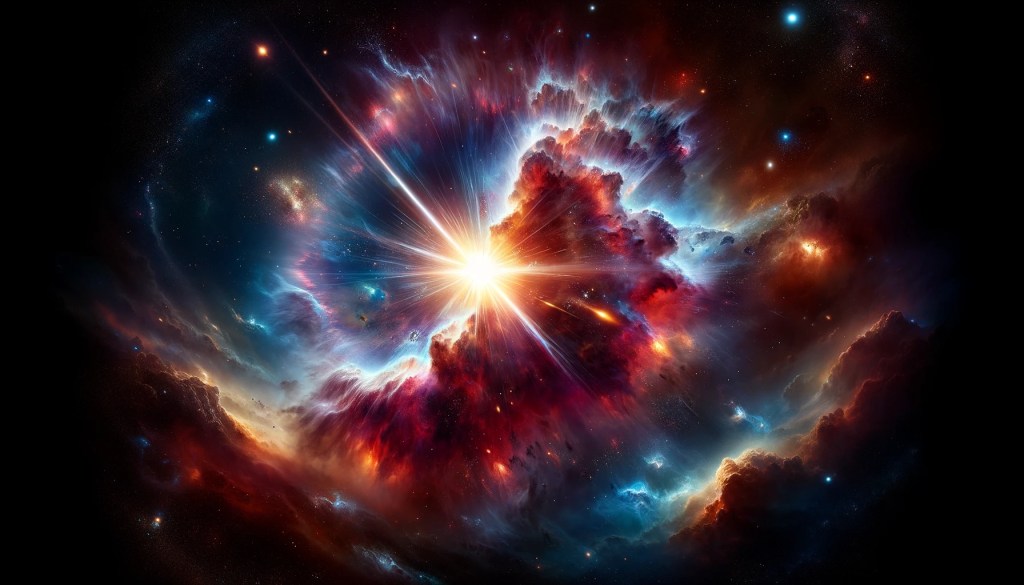
But, like all things, stars don’t last forever. They spend most of their lives fusing hydrogen into helium. However, when the hydrogen runs out, the star enters its retirement phase. For a sun-like star, this means expanding into a red giant. Imagine the sun, but so large it could engulf the orbits of Mercury, Venus, and maybe even Earth. These giants are cooler, hence their reddish hue, but they’re anything but calm, often pulsating and throwing off their outer layers into space.
For the most massive stars, the story gets even more dramatic. They become supergiants and can explode in a supernova, outshining entire galaxies for a brief moment. What remains can be a neutron star, an object so dense a teaspoon of its material would weigh as much as a mountain, or even a black hole, a point in space where gravity is so strong, not even light can escape.
Eventually, even stars like our sun quietly exit the stage, leaving behind a white dwarf, a hot, dense core that slowly cools over billions of years. It’s a gentle end to a long, luminous life.
Every star in the sky is somewhere in this incredible life cycle. Some are just beginning their journey in the cosmic ballet, while others are taking their final bows. It’s a reminder of the dynamic, ever-changing universe we’re a part of—a universe where endings are often just the beginning of something new.
Before we go, let’s also commemorate a significant event in space history. On April 12, 1961, cosmonaut Yuri Gagarin became the first human to journey into outer space and orbit the Earth.
His historic flight aboard Vostok 1 marked the beginning of human space exploration, forever changing our relationship with the cosmos. Gagarin’s courage and the scientific achievements of his mission remind us of the boundless potential for discovery that lies beyond our planet.
As we wrap up this week’s episode, I encourage you all to look up and embrace the beauty of the night sky. Whether it’s witnessing the dramatic eclipse, observing the planets, or catching a glimpse of distant galaxies, there’s wonder to be found in the darkness. Until next time, keep your eyes to the skies and your hearts filled with curiosity. Clear skies and happy stargazing!
 Star Trails: A Weekly Astronomy Podcast
Leave a comment