Blood Moon Rising: A Total Lunar Eclipse – Star Trails: A Weekly Astronomy Podcast
Episode 55
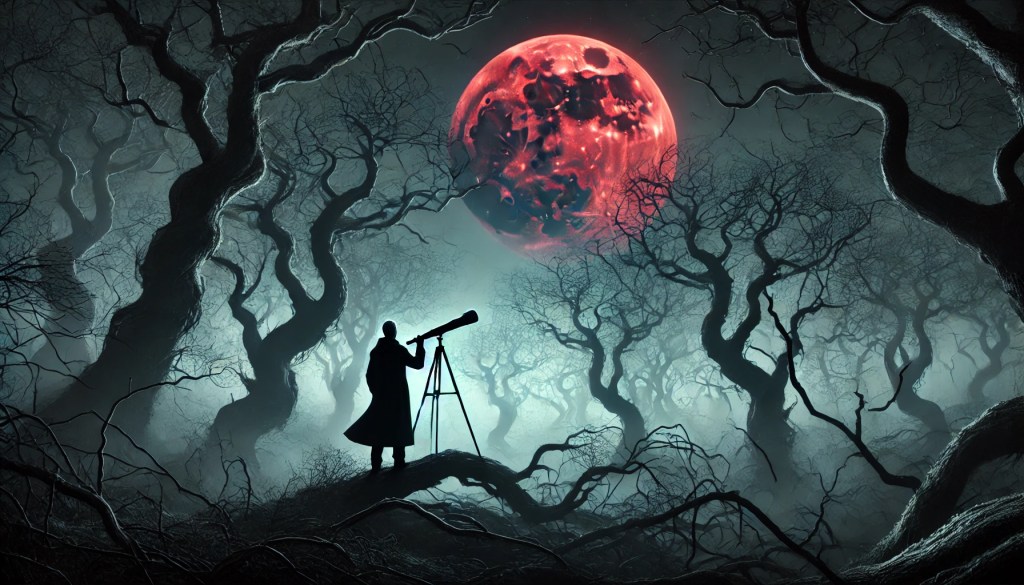
A total lunar eclipse is on the way! This week, the Full Worm Moon will turn a deep red as Earth’s shadow completely covers it. We break down when and where to watch this Blood Moon on the night of March 13–14, plus the science behind its eerie glow.
Meanwhile, Saturn disappears into the Sun’s glare, but Mercury, Venus, Jupiter, and Mars remain visible. Drew shares tips on spotting Mercury just after sunset and why Venus is still stealing the evening show. We’ll also discuss Daylight Saving Time’s impact on stargazing.
Finally, we check in with NASA’s SPHEREx mission, a newly launched space telescope that will scan the entire sky in infrared light, unlocking secrets about the early universe, galaxy formation, and the search for water and organic molecules in space.
Transcript
[MUSIC]
Howdy stargazers and welcome to this episode of Star Trails. I’m Drew, and I’ll be your guide to the night sky for the week starting March 9th through the 15th.
This week a total lunar eclipse turns our full Moon blood red, we say goodbye to Saturn for a while, and a newly-launched space telescope promises to redefine how we see the universe. So grab a comfortable chair under the night sky, and let’s get started.
First up, let’s check in with our neighbor, the Moon. This week, our lunar cycle moves from a waxing gibbous to a brilliant Full Moon on the early morning of March 14th.
March’s Full Moon is known as the Worm Moon, a name passed down from Native American tribes. It marks the thawing of the ground and the return of earthworms—an important sign that spring is right around the corner! And this year’s Worm Moon is going to be extra special because it’s also bringing us a total lunar eclipse.
On the night of March 13th into the early hours of March 14th, we’ll witness a total lunar eclipse, sometimes called a Blood Moon owing to the eerie reddish hue the Moon takes on during totality.
A lunar eclipse occurs when the Earth comes directly between the Sun and the Moon, casting a shadow that darkens the lunar surface. There are three phases of a lunar eclipse:
The penumbral phase begins around midnight Eastern Standard Time. The Moon starts to move into Earth’s outer shadow, causing a slight dimming that’s hard to notice with the naked eye.
The partial eclipse begins after 1 a.m. EST, when the Moon enters the darker, inner part of Earth’s shadow, the umbra, and a bite-like shadow appears on the lunar surface.
Totality begins around 2:30 AM EST, when the Moon is fully covered by Earth’s umbral shadow, glowing red due to sunlight scattering through Earth’s atmosphere. That deep red color happens because Earth’s atmosphere filters out shorter-wavelength blue light and bends the longer-wavelength red and orange light toward the Moon. Essentially, it’s the same reason why sunsets look red.
If you want to catch this phenomenon, head outside after midnight on March 13th into March 14th. The Moon will appear high in the sky, making it easy to watch from anywhere with clear weather.
Visible planets this week include our usual suspects, minus Saturn, which is now in the Sun’s glare. You may be able to catch Mercury in the western sky shortly after sunset. You’ll need a clear view of the horizon, as it’s very low, and it sets not long after sunset.
Shining brightly as the “Evening Star,” Venus will be prominent in the western sky after sunset. Right now it’s the third brightest object in the sky after the Sun and Moon. However, as the month progresses, Venus will move closer to the Sun and become less visible, eventually transitioning to the morning sky.
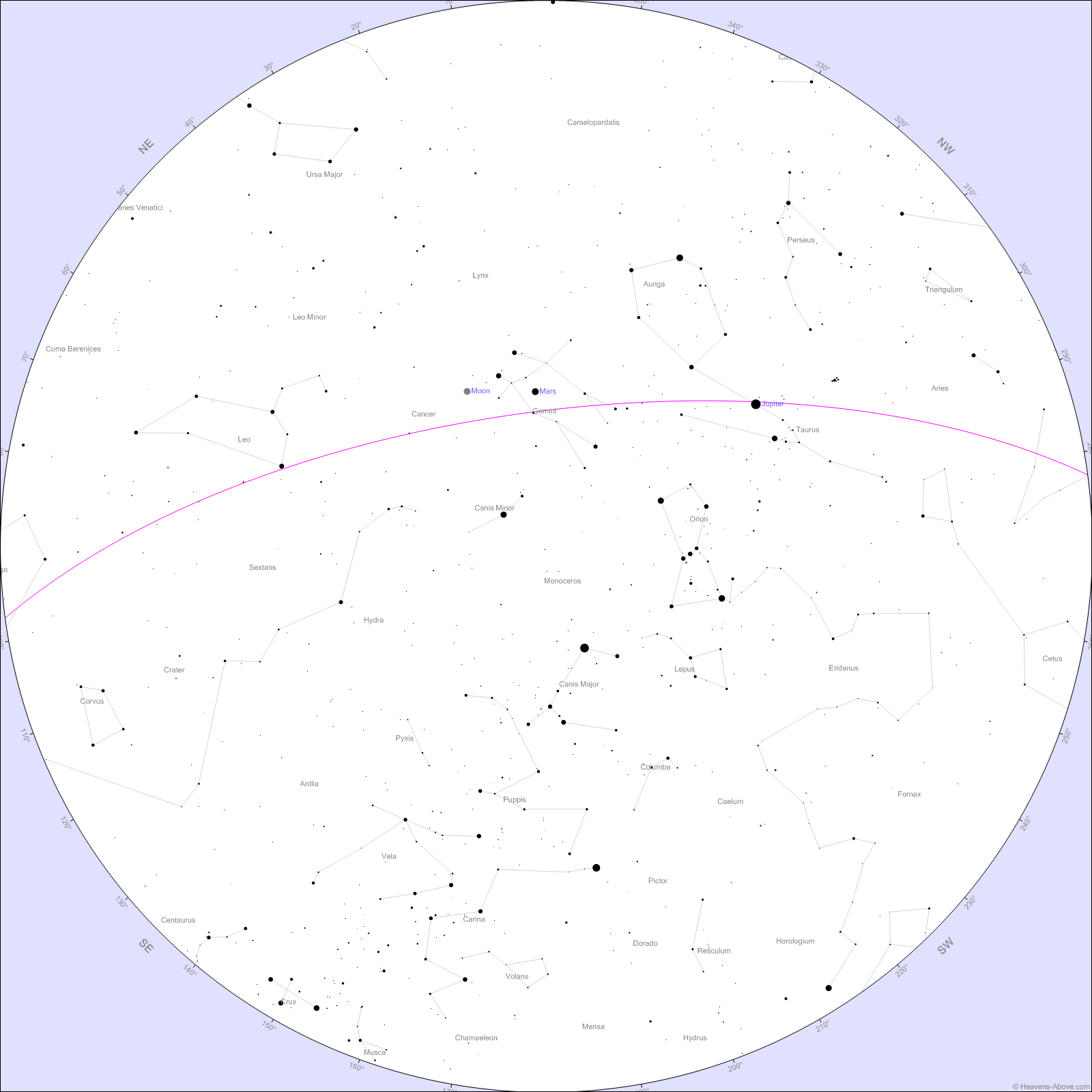
Jupiter continues dominating the southern sky in the evening. It will be high overhead as darkness falls, setting in the early morning hours. Its brightness makes it easily observable with the naked eye, and good binoculars or a telescope can reveal its four largest moons.
Mars is high in the sky in Gemini after sunset. Look for its reddish hue to distinguish it from nearby stars.
[Transition FX]
Today marks the beginning of Daylight Saving Time for many listeners. Clocks will ‘spring forward’ one hour in many regions, meaning sunset will happen later in the evening—great news for evening activities, but it does push back our prime stargazing hours.
This shorter observation window means you’ll need to wait an extra hour for darker skies to see fainter stars and deep-sky objects. The lunar eclipse won’t be affected since it’s happening in the early morning before daylight interferes.
So, plan accordingly. If you’re used to heading out at 8 PM to see the night sky, you may now have to wait until closer to 9 PM for the best views.
[Transition FX]
Last week NASA launched an ambitious mission designed to map the entire sky.
The SPHEREx mission – that stands for Spectro-Photometer for the History of the Universe, Epoch of Reionization, and Ices Explorer – is a new space telescope designed to conduct an all-sky infrared survey. The goal is to provide astronomers with an unprecedented view of the cosmos.
Launched just last week, this mission will help answer fundamental questions about the origins of the universe, the formation of galaxies, and the distribution of water and organic molecules in the Milky Way.
Unlike traditional space telescopes such as the James Webb Space Telescope or Hubble, which focus on deep-space observations of specific targets, SPHEREx will systematically scan the entire sky multiple times over its two-year mission. The telescope will capture near-infrared light, allowing it to detect objects obscured by dust, including galaxies, nebulae, and regions where new stars are forming.
SPHEREx will also perform spectroscopy on every part of the sky it observes. This means it will split incoming light into different wavelengths, revealing detailed information about the composition and distance of objects in space. The mission’s instrument will collect spectra from more than 450 million galaxies and 100 million stars within the Milky Way.
One of SPHEREx’s primary objectives is to explore the earliest moments of cosmic history. Scientists believe that tiny quantum fluctuations during the Big Bang led to the formation of galaxies and large-scale structures in the universe. By mapping these structures across vast cosmic distances, SPHEREx will provide insights into how the universe evolved from its infancy to the present day.
The Epoch of Reionization marks the period when the first galaxies and stars formed, lighting up the universe after the cosmic dark ages. By analyzing infrared light from ancient galaxies, SPHEREx will help astronomers understand when and how this process unfolded, shedding light on one of the most mysterious eras in cosmic history.
SPHEREx will also play a crucial role in studying the origins of life-related molecules. By mapping water ice and organic compounds in interstellar clouds, the mission will help scientists determine where these essential building blocks of life exist in our galaxy. Understanding their distribution is vital to uncovering how planets, including Earth, formed and whether life might exist elsewhere in the universe.
By capturing a 3D map of cosmic evolution, SPHEREx will help answer some of astronomy’s biggest questions—offering new insights into the birth of galaxies, the origins of water, and the structure of the universe itself.
[MUSIC]
If you found this episode helpful, let me know, and feel free to send in your questions and observations. The easiest way to do that is by visiting our website, startrails.show. This is also a great way to share the show with friends. Until next time, keep looking up and exploring the night sky. Clear skies, everyone!
Support the Show
Connect with us on Mastodon @star_trails or on Bluesky @startrails.bsky.social
If you’re enjoying the show, consider sharing it with a friend! Want to help? Buy us a coffee!
Podcasting is better with RSS.com! If you’re planning to start your own podcast, use our RSS.com affiliate link for a discount, and to help support Star Trails.
 Star Trails: A Weekly Astronomy Podcast
Leave a comment