Dawn Patrol: Planets, Meteors, and a Wandering Comet – Star Trails: A Weekly Astronomy Podcast
Episode 61
Not every week is packed with drama in the skies, but that doesn’t mean it’s empty! This short episode covers the best of what is happening: the Lyrids peaking, a rare comet making an appearance, and a graceful planetary alignment to catch before sunrise.
Transcript
[MUSIC]
Howdy stargazers and welcome to this episode of Star Trails. I’m Drew, and I’ll be your guide to the night sky for the week starting April 20th through the 26th.
This week’s episode is a shorter one, as there isn’t much to report in the night sky that’s different from previous weeks. We’re monitoring a new comet that’s fairly tricky to spot in the pre-dawn hours, and we’re approaching the peak of the season’s first meteor shower. So, grab a comfortable spot under the night sky and let’s get started.
The week begins with the Moon in its Last Quarter phase. As the week progresses, the Moon wanes towards a New Moon, which will occur next Sunday, on April 27th. With darker skies, this period could be an ideal time to track down some of those targets we mentioned in our “galaxy season” episode from March 30th.
This week also marks the peak of the Lyrid meteor shower, which occurs on the night of April 21st, into the morning of April 22nd. Observers can expect up to 20 meteors per hour under ideal conditions. However, the waning crescent Moon rising a few hours before dawn may slightly hinder visibility.
Even with the slender Moon, you shouldn’t have any issues spotting brighter meteors. The radiant – that’s the point from which the meteors appear to originate – is around the star Vega. But you can see them anywhere in the sky. Just look up – no special viewing equipment is needed.
Additionally, the Eta Aquarid meteor shower begins tonight, with activity increasing towards its peak in early May. While more prominent in the Southern Hemisphere, northern observers may still catch glimpses of these swift meteors in the early morning hours
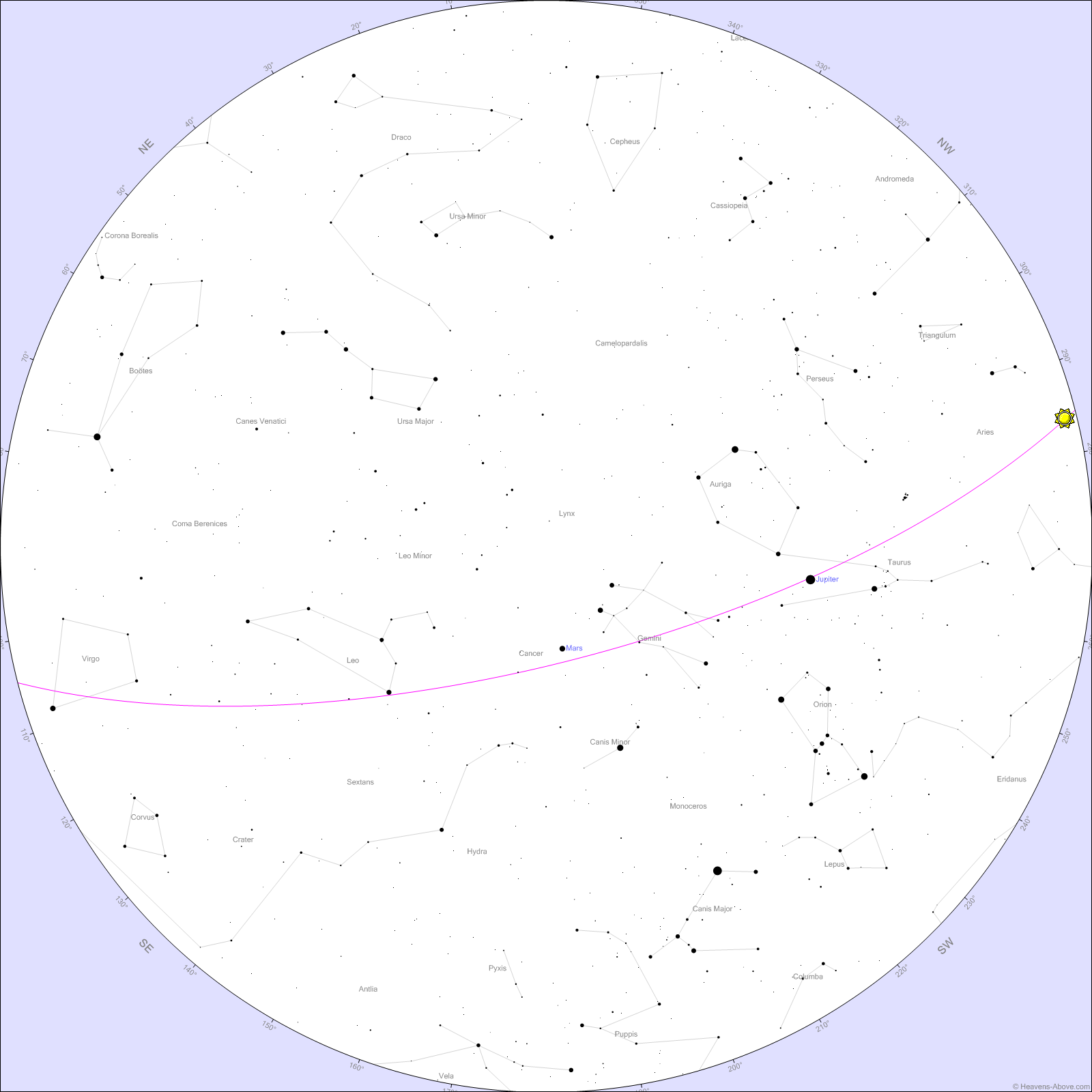
Speaking of early hours, a captivating planetary alignment is unfolding just before dawn. Venus, Saturn, and Mercury form a trio visible to the naked eye, with Venus shining the brightest.
On April 25th, a slender crescent Moon joins this assembly, enhancing the spectacle.
In the evening sky, Jupiter remains prominent in the west, gradually setting earlier each night. Mars trails behind, still hanging out in Gemini. Look for its reddish glow near the twin stars of Castor and Pollux.
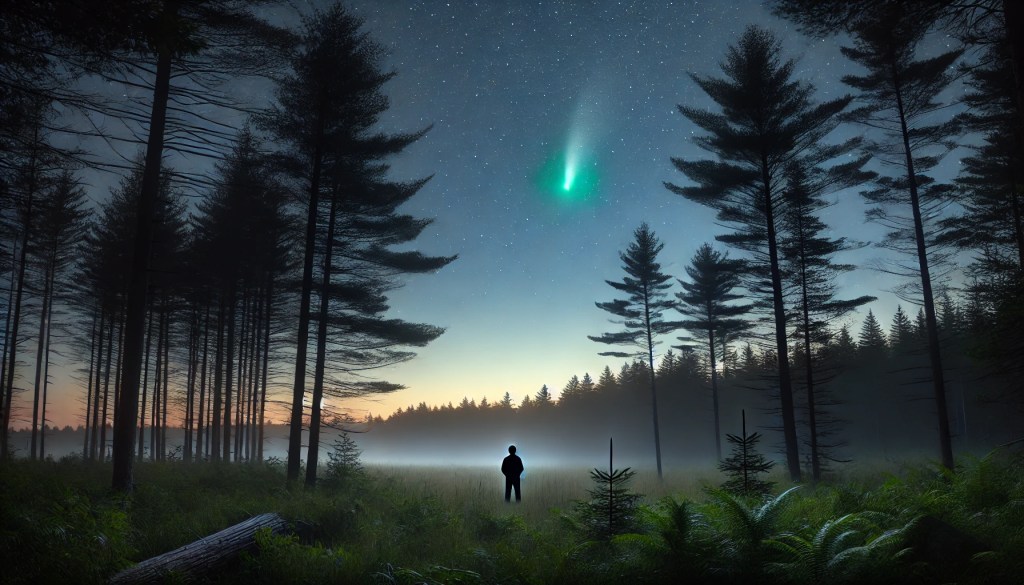
Comet C/2025 F2, SWAN, is putting on a subtle but promising show for early risers this week. Discovered in late March, this newly arrived visitor is glowing with a characteristic green hue thanks to excited carbon molecules in its coma.
Right now, it’s visible low on the east-northeastern horizon just before sunrise—binoculars or a small telescope will help you spot it near the Great Square of Pegasus. The comet is currently around magnitude 8.4, so it’s still below naked-eye visibility.
SWAN will approach perihelion on May 1, when it will be just 31 million miles from the Sun. After perihelion, it will transition to the evening sky, possibly offering a beautiful pairing with the Pleiades star cluster around April 30 to May 2.
For backyard astronomers, this is a unique chance to catch a comet with a once-every-70,000-year orbit. I’m already seeing reports from some astrophotographers that this comet is growing dimmer, so as always, these cosmic snowballs are proving unpredictable. We’ll keep an eye on it in the coming weeks.
[MUSIC]
If you found this episode helpful, let me know, and feel free to send in your questions and observations. The easiest way to do that is by visiting our website, startrails.show. This is also a great way to share the show with friends. Until next time, keep looking up and exploring the night sky. Clear skies, everyone!
Support the Show
Connect with us on Mastodon @star_trails or on Bluesky @startrails.bsky.social
If you’re enjoying the show, consider sharing it with a friend! Want to help? Buy us a coffee!
Podcasting is better with RSS.com! If you’re planning to start your own podcast, use our RSS.com affiliate link for a discount, and to help support Star Trails.
 Star Trails: A Weekly Astronomy Podcast
Leave a comment