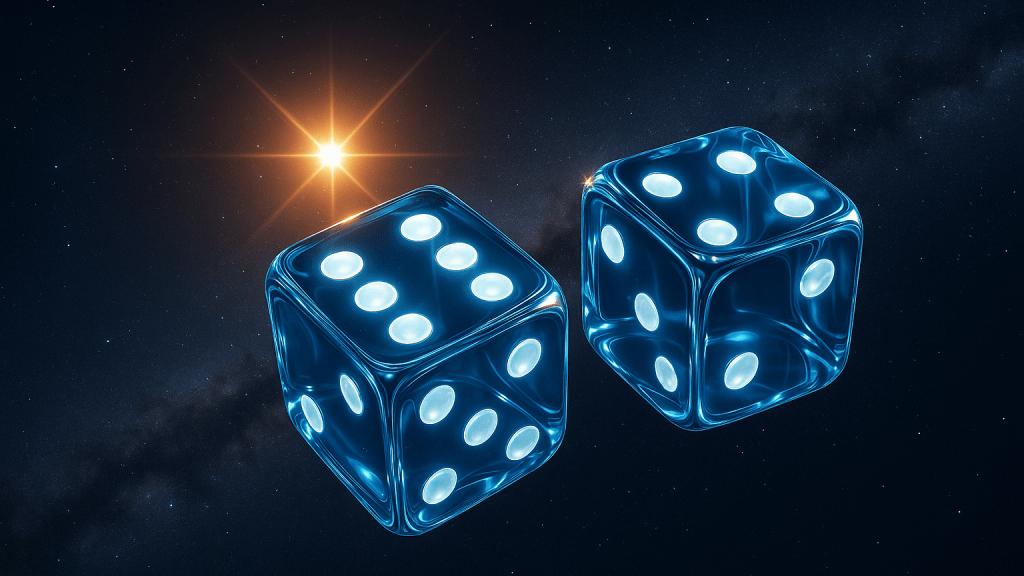
Playing Dice with the Universe – Star Trails: A Weekly Astronomy Podcast
Episode 87
This week on Star Trails, we let the universe decide.
We fire up a real quantum computer to generate pure randomness — the seed for a million-universe simulation of the famous Drake Equation. Each run explores how many intelligent civilizations might exist in our galaxy, from barren voids to thriving cosmic metropolises. The results are startling, the implications profound, and the method delightfully nerdy.
Along the way, we revisit the roots of the Drake Equation, the strangeness of quantum mechanics, and the poetry of probability. Then we step outside to the real night sky: the waning Moon, Saturn’s thinning rings, Jupiter’s bright rise, and the Taurid fireballs streaking through November darkness.
I also share how I photographed the recent Full Beaver Moon using Stellarium, PhotoPills, and The Photographer’s Ephemeris.
This episode blends code, cosmology, and contemplation.
Links
Transcript
[MUSIC]
Howdy stargazers and welcome to this episode of Star Trails. My name is Drew, and I’ll be your guide to the night sky for the week of November 9th to the 15th.
This week we’re going to kick things off with yet another exercise related to a subject that I find endlessly fascinating – the search for extra terrestrial intelligence.
We’re going to take another look at the Drake Equation – a tool used to estimate how many intelligent species we might have in our home galaxy – and we’re going to use that equation to simulate more than a million variations of the Milky Way, employing some quantum physics along the way to kick-start our experiment. I think you’re going to be blown away by the implications, because I know I was.
Later we’ll check in on the night sky, and I’ll tell you how I captured an image of last week’s full Beaver Moon using some of my favorite astronomy smartphone apps.
Whether you’re tuning in from the backyard, the balcony or just your imagination, I’m glad you’re here, so grab a comfortable spot, and let’s see what the universe holds for us this week
[INTRO MUSIC FADES OUT]
[MUSIC – LOW DRONES]
A couple weeks ago we explored the Fermi Paradox, the idea that in a universe so vast, we should be hearing or seeing indications of intelligent life. Yet, here we are in the cosmic void, seemingly all by ourselves. For the past 50 years or more, programs like The Search for Extra Terrestrial Intelligence, or SETI, have churned away, theorizing and scanning the skies with radio telescopes in search of something – anything – to tell us we’re not alone.
And for two decades volunteers even donated their CPU cycles to analyzing radio data via the SETI@Home project, pioneering distributed computing methodologies in the process.
And we’ve found nothing.
But surely something MUST be out there. So in this episode we’ll turn to the world of statistics and data analysis. We’re going to use a quantum computer to tap into the inherent randomness of the universe itself, and we’re going to use that information to run the Drake Equation more than a million times. We’re going to play dice with the universe and explore the probability of extra terrestrial life.
To start, let’s get a refresher on what the Drake Equation is. I’ve sort of had a lifelong fascination with it, since I cracked open Carl Sagan’s Cosmos as a pre-teen and first encountered it. The idea that an equation could make a prediction about the density of alien life sparked profound wonder in me at that age.
We talked about it in some detail back in Episode 85, “The Silence Between the Stars.” Today, we’re going to dig in a little deeper. You may recall from that earlier episode that the Drake Equation was an attempt by scientist Frank Drake to mathematically make sense of the Fermi Paradox.
In 1961, Drake hosted a small meeting at the Green Bank Observatory in West Virginia, the first gathering devoted to the search for extraterrestrial intelligence. He scribbled a simple formula on a blackboard to structure their discussion. It’s really just a series of numbers that we multiply together:
N = R_* * f_p * n_e * f_1 * f_i * f_c * L
Just seven variables. It’s almost unnervingly simple on the surface. Seven factors. Seven cosmic knobs if you will. It breaks down like this:
R_* is the average rate of star formation in our galaxy
f_p is the fraction of those stars with planets
n_e is the average number of planets that can potentially support life
f_1 is the fraction of planets that actually develop life
f_i is the fraction of planets that develop intelligent life
f_c is the fraction of civilizations that release signs of their existence into space
And L is the length of time such civilizations release those signals of their existence.
Just multiply them all together and you get N: The number of intelligent civilizations in the Milky Way right now.
But this is where the simplicity collapses. Because we don’t know any of those variables with confidence. We only have one biological datapoint — us. We have one technological species datapoint — us. We have one lifetime datapoint — also us. And since we don’t know where our own story ends yet, even that datapoint is incomplete.
So when people plug numbers into Drake and solve for N — that neat answer is an illusion. Drake isn’t an equation you simply solve. It forces you to confront the fact that everything important in that multiplication is unknown.
So what do you do with an equation whose inputs are unknown? You treat those inputs probabilistically.
You don’t pick single values. You define plausible ranges based on astrophysics, exoplanet surveys, and reasonable scientific priors, and then you sample from those ranges again and again, and again. You generate not one answer — but a landscape of possible answers. A distribution.
This is how modern SETI researchers think about Drake. Not as an answer machine, but as a probability engine.
So in that spirit — we’re about to run some code to big bang more than a million versions of the Milky Way and see what those universes tell us.
We are, in effect, gambling with the universe’s uncertainty, and we’re going to roll nature’s dice using some quantum mechanics.
Einstein famously said, “God does not play dice with the universe.” He wasn’t a fan of quantum randomness, and believed the laws governing the universe were fixed. But we’re going to play dice with the universe anyway. My apologies to Albert.
Here’s the plan: We’re going to make use of the general programming language of Python to produce more than a million outcomes of the Drake Equation. The program will randomly select a number for each variable from a pre-defined range of conservative educated estimates for each. Think of it as generating a million versions of the Milky Way.
The pre-defined ranges for each variable are the glue that makes this work. We’re going to use some plausible data drawn from everything we know about the universe – and everything we don’t. These aren’t my ranges by the way – these are some widely-accepted best-guess envelopes based on papers, expert intuition, SETI tradition, astrobiology optimism and more.
Once the program runs, we’ll analyze the resulting data. We’re looking for two extremes: The highest number of estimated intelligent civilizations, compared to the lowest number. And we’ll be on the lookout for a “zero” result – meaning an iteration produced NO intelligent civilizations. This approach is called a “Monte Carlo” simulation.
To add some philosophical flair, I specifically wanted to seed my sim with a 128-bit random number produced by a quantum computer. It sounds like science fiction – but it’s not.
For this experiment, I used IBM’s quantum computing platform, via their Qiskit framework. It’s a real quantum computer that we can rent time on. It isn’t a simulation, it’s actual superconducting qubits chilling near absolute zero.
Why 128-bits? Well, this is a cryptography-grade random number. If represents 2^128 possible outcomes. That’s more possibilities than there are atoms in a typical galaxy.
We wrote a simple quantum random number generator – a QRNG – in python with some help from an AI, because this realm is way beyond my skillset. The code essentially generates 128 quantum coin flips.
And if creating a QRNG sounds like overkill for what’s usually a simple randomize function in any programming language, you’re not wrong. But we’re using quantum physics to generate our number because that’s about as close as we can get to asking the universe itself for randomness. The quantum computer is literally driven by the uncertainty built into the fabric of reality.
Quantum computers don’t use bits – the ones and zeroes used in classical computers. They use qubits, which are similar to traditional bits, but they can exist in a state of superposition, meaning they could either be a one or zero. In fact, they have no state until they are measured, meaning they hold multiple possibilities until we force an outcome.
You may have heard this called the “Observer Effect” when it comes to quantum mechanics. You may have also heard of the thought experiment known as Schrodinger’s Cat – a feline in a box that exists in both an alive and dead state – until we open the box and look at it. That’s quantum mechanics at its most basic, and that’s also why it’s so weird. These are behaviors at the smallest level of existence – individual particles.
Our python script constructed a tiny quantum circuit that creates qubits in superposition and collapses them when measured — and we harvested the randomness from that collapse to generate our seed.
Essentially we fire qubits through a series of quantum logic gates 128 times. The gates force the qubits into a 1 or 0 outcome. Once we have 128 ones and zeros, we convert that binary string into base-10 decimal, and that extremely random number becomes the seed.
Strangely, operating a quantum computer reminds me of the old mainframe systems of the 60s and 70s. To use one, you submit a job to it. Your job waits in a queue until the machine can run your code. Then it returns a result. IBM’s Qiskit framework lets you both simulate a quantum computer, and send jobs to their real one via their public application programming interface, or API in coding parlance.
So before I started burning qubits on the real hardware, I ran a local sim to make sure the code worked as intended. When I was satisfied with the output, I submitted the job to IBM and waited a minute or two for the result to come back.
And there it was, a QRNG seed – the randomness that sets our experiment into motion. Let me tell you, THAT was a lot of work to get a random number.
But the beauty of this method would reveal itself later in a moment of realization that left me in a state of both shock and awe.
The rest of our calculations would take place in a very simple Python script here on my workstation – and by the way, I’ll make all my code available if you want to run it, check the show notes for details.
In classical computing, a seed initializes the random number generator in your programming language of choice. Once you have a seed every random number after that traces back to that original seed.
We’re starting with a quantum seed, but we’re turning that chaos into classical determinism.
On the first run, I set up the script to generate 250,000 solved versions of the Drake Equation. It ran in seconds. Think of each version as one possible cosmic outcome. Basically, we simulated a quarter million pocket universes, each with its own set of Drake parameters.
Some outcomes produced thousands of intelligent species. Some produced hundreds. The maximum seemed to land somewhere at just under a quarter million intelligent species in the galaxy. Most runs produced galaxies with at least 700 species.
So I ran the Monte Carlo sim again, this time with 500,000 outcomes. Then a million. Then, two million.
Strangely, the numbers didn’t vary by much. But here’s the part that hit me like a dinosaur-killing asteroid:
In each run — seeded by that actual quantum hardware — ZERO universes came up empty. Zero. In other words, all the universes we simulated produced intelligent life, based on the conservative range of values we plugged into the Drake equation.
Let me state that another way: A real quantum mechanical process — not a software algorithm, but a literal probabilistic collapse event inside superconducting hardware, gave us a seed that led to a distribution of data that tells us we’re probably not alone in the universe.
I didn’t breathe for a full minute as this realization washed over me. And even now I get chills thinking about it.
Now, this doesn’t mean we’ve proven anything. It doesn’t mean aliens are guaranteed. It doesn’t mean the equation reveals the truth. But it does mean that when you explore the space of plausible Milky Ways with honest scientific uncertainty — there’s almost no chance that we’re alone.
And just for fun, I tried to get absurd. I tried to simulate a BILLION universes. That’s when my workstation threw up the white flag. The CPU, all 24 cores, shot up to its maximum 5 GHz clock speed. The RAM usage hit the ceiling at 64 gigs and the cooling fans spun up like jet engines. It completely choked. And the funny thing is, it didn’t matter.
We already saw everything we needed to see back at a quarter-million samples. And it was completely stable by one million. The shape of the uncertainty reveals itself quickly — and throwing more universes at it doesn’t make reality any more certain. You just generate heat and thermodynamic suffering on the CPU.
This Monte Carlo exercise — this million universe experiment — isn’t meant to be proof. It simply offers perspective.
We don’t get a single number from Drake. We get a distribution of possibility. And inside that distribution, the middle ground — the typical universe — contains neighbors. Sometimes a few. Sometimes many.
And we didn’t bias that outcome with wishful thinking. We seeded that simulation with randomness drawn from quantum measurement — the most fundamental unpredictability that nature gives us.
People think the Drake Equation is about estimating aliens. I think it’s actually about estimating ourselves. It forces us to confront how narrow our experience is and how broad the universe might be.
The Fermi Paradox wonders “Where is everybody?” Drake tells us “there might be many somebodies, but probability and distance and lifetimes might keep us apart.”
Scientists working on Drake today are pushing into better estimations, especially around habitable planets and biosignatures. The James Webb Space Telescope and future missions may eventually constrain the f_l parameter – life emergence – far more than we ever could before.
Exoplanet atmospheric chemistry may eventually give us actual statistics — not just speculative boundaries. And the biggest uncertainty — L — the lifetime of communicative civilizations may be the most existential. Because its true value might say more about our future than about our past.
And maybe that’s the deepest irony here. The Drake Equation may eventually tell us more about what kind of species we are capable of becoming than it tells us about the species that already exist somewhere else.
[MUSIC BED]
With that, let’s step out of the multiverse, and drop back into the single universe we inhabit — the one overhead tonight — and talk about what’s happening in the real night sky this week. That’s coming up after the break. Stay with us.
[MUSIC UP AND OUT]
[AD BREAK]
[MUSIC RETURNS]
Before we get into this week’s sky, I wanted to give another quick observation report.
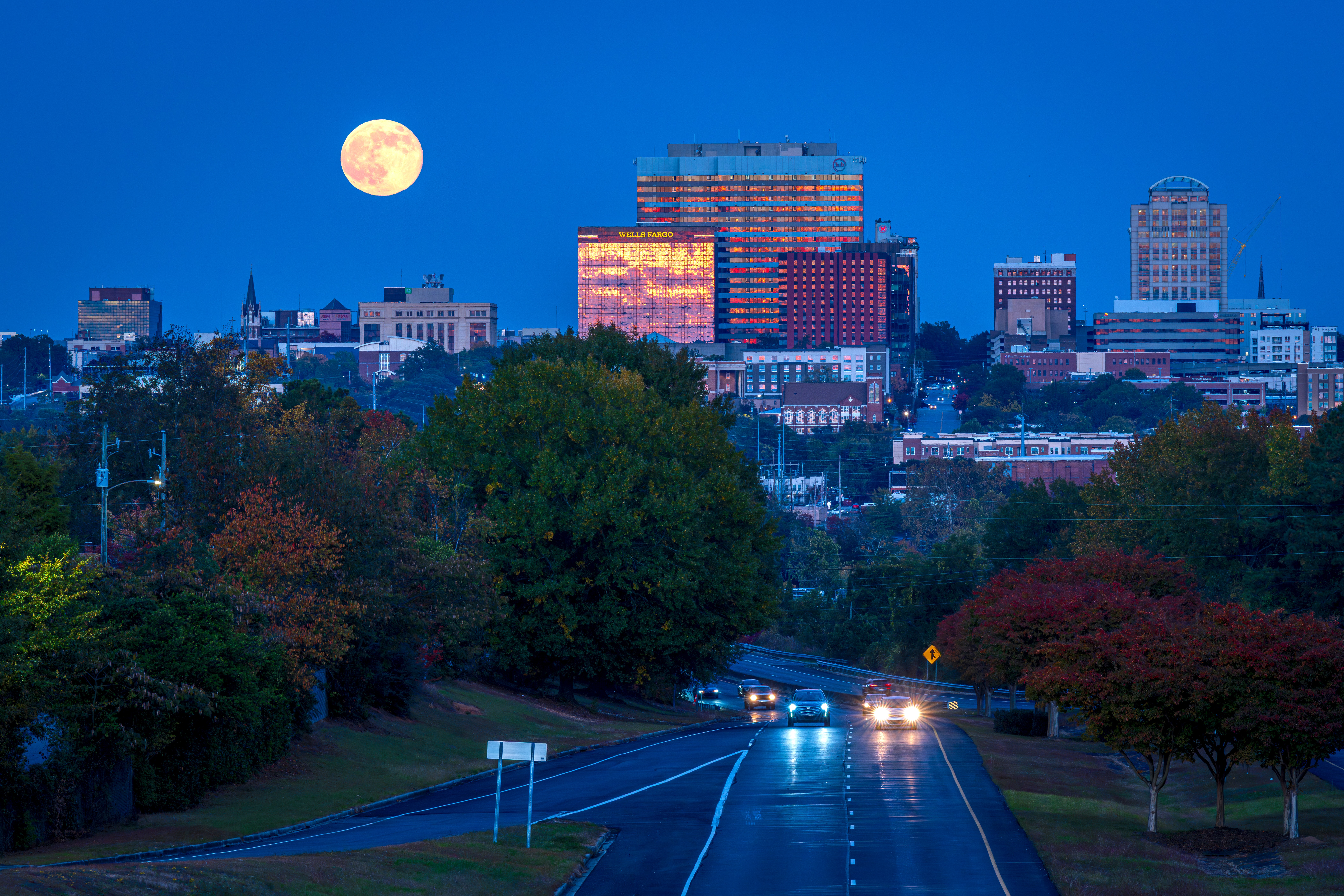
As you all recall, the full moon was last week, and it was a supermoon. Sometimes I enjoy photographing a full Moon. My favorite shots show the Moon in relation to the urban landscape. I love how the Moon looks gigantic near the horizon – an effect we call “The Moon Illusion.” It’s not bigger – it just seems bigger when it’s adjacent to objects that we already understand the scale of.
So last Tuesday was a gorgeous, clear evening, and I didn’t have any after-work commitments, so I drove out to a location I’ve shot from in the past – a highway overpass just outside the city that faces due east.
Using a 200mm lens on my full-frame camera, I managed to capture a massive moon, just as it rose over the skyline. I only had a few minutes to get the shot, as once the moon rises higher and the ambient light dips, it’s hard to balance the Moon’s brightness with the city’s darkness. Twilight, with some light in the sky, works the best.
Capturing a shot like this isn’t luck. It’s planning. There are three apps I lean on when I want to line up the Moon precisely with a skyline — Stellarium, PhotoPills, and The Photographer’s Ephemeris.
Stellarium gives me the astronomy-first view. I can preview the night sky exactly as it will appear from my location, jump forward in time, and verify altitude and azimuth. That tells me when and where the Moon will be above the horizon.
PhotoPills takes that same information and grounds it into the language photographers think in: exact rise time, exact bearing, and whether the Moon’s trajectory will intersect a specific place on Earth if I stand right here. This app uses augmented reality to help you place the sun or moon in your scene. I can check focal lengths, distances, compression, and get confidence that the scale will look right.
And The Photographer’s Ephemeris helps lock the terrestrial geometry in. That’s the piece that tells me where to physically stand: which road, which hilltop, and even which building the Moon will appear behind. It shows the rise line across the map, and I can drag my shooting location until the Moon’s path intersects the exact building I want.
Together, those three apps turn an event that looks “lucky” into something you can intentionally design, days or even weeks ahead of time. The shot begins before you ever set the tripod down.
I’ll include links in the show notes to these resources if you’re interested.
[TRANSITION FX]
This week the Moon slides from a waning gibbous toward the Last Quarter phase, which happens on Wednesday the twelfth, in the very early hours of the morning. After that, the Moon shrinks into a thinner crescent each night, which means a darker sky window is opening up as we head toward the weekend.
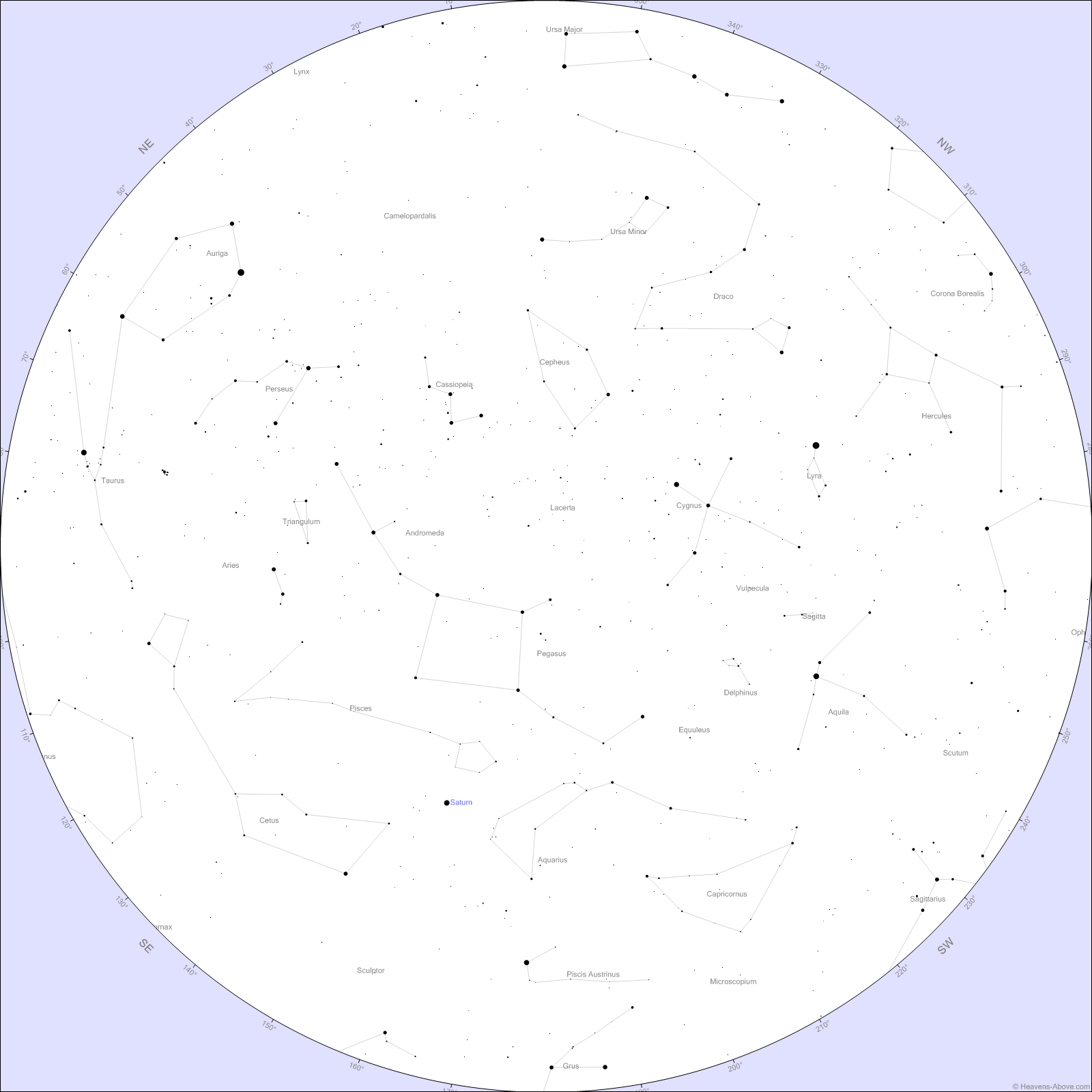
Saturn still rules the early evening sky over in the southeast. The rings are almost edge-on now, so in a telescope they’re a fine, thin line.
Jupiter steals the second half of the night. It rises later in the evening and is high before dawn. The Moon makes a close pass with Jupiter Monday night into Tuesday morning — so if you’re out late, or awake before sunrise on the eleventh, take a look for that pairing.
Uranus is also in the evening sky, and headed toward opposition later this month. If you have binoculars and a dark sky, spend a little time trying to pick it out — it’ll look like a tiny blue-green star. Neptune is in the evenings too, but you’ll need a telescope.
Venus is now extremely low in the morning twilight. If you have a clear, flat eastern horizon, you might catch it in the dawn light late in the week, especially if you pair it with the delicate crescent Moon Friday or Saturday morning. Mars and Mercury, meanwhile, are essentially lost in the Sun’s glare.
We also have meteor action this week. The Northern Taurids peak on Tuesday night into Wednesday — the eleventh into the twelfth. This is not a high-rate shower, but the Taurids are known for bright, slow fireballs. Moonlight will wash out the dimmer ones, but if you’re patient, you might still spot a good one. And the Leonids are right behind them — their main peak will arrive next week, under better moon conditions.
The deep sky season continues to get better as the Moon wanes. The Andromeda Galaxy is high after dark. So are the Pleiades and the Hyades — perfect binocular targets.
[MUSIC]
You know, at the end of all this numbers are only part of why we look up. The equations, the instruments, the simulations — they help us measure possibility. But wonder lives before measurement. Wonder is older than science. Wonder is the first tool we ever had.
When we look at the night sky, we aren’t just observing the universe. We’re also observing ourselves. The cosmos isn’t just a place we study, it’s a mirror that we hold up to our own short, small moment in time.
So yes, we count stars. We model probability. We write code. We build telescopes. But beneath all of that — we’re trying to remember that being alive is strange and extraordinary. And the very act of wondering is itself part of what makes us human.
We look up, not just because the sky is beautiful, but because it reminds us there’s always more to know. And that curiosity is a kind of hope.
If you found this episode interesting, please share it with a friend who might enjoy it. The easiest way to do that is by sending folks to our website, startrails.show. And if you want to support the show, use the link on the site to buy me a coffee. It really helps!
Be sure to follow Star Trails on Bluesky and YouTube — links are in the show notes. Until we meet again beneath the stars … clear skies, everyone.
[MUSIC FADES OUT]
Support the Show
Connect with us on Bluesky @startrails.bsky.social
If you’re enjoying the show, consider sharing it with a friend! Want to help? Buy us a coffee!
Podcasting is better with RSS.com! If you’re planning to start your own podcast, use our RSS.com affiliate link for a discount, and to help support Star Trails.
 Star Trails: A Weekly Astronomy Podcast
Leave a comment